Piers stop a house from sinking further. They don't stop the clay around them from swelling and shrinking with every drought and rain, and on Alvin's expansive soil that swing is what moves foundations in the first place. Managing soil moisture, keeping the clay at a steadier water content year-round, is the prevention half of foundation care here, and it's the cheaper half. Skipping it means even a solid pier job can crack again as the ground keeps cycling underneath it. The specific moves that flatten that swing:
Why moisture control matters more in Alvin than most places
Alvin sits on smectitic Vertisol clay (the Beaumont, Bacliff, Lake Charles, and Bernard family) with control-section clay running roughly 42 to 60 percent. When it dries, it does more than get firm. It cracks open, with fissures 1 to 2 inches wide and at least a foot deep, and on the Lake Charles series those cracks stay open 60 to 90 cumulative days in a typical year. Then the rain returns, often as a tropical or frontal downpour rather than steady rainfall, the clay drinks it back up, and the ground swells shut. That's a real, measurable seasonal range of movement happening a few feet under a slab.
The driver here is that drought-then-rain swing, not frost. Alvin's hot season runs about four months, late May through late September, with roughly 75 days a year hitting 90°F or higher, and that long high-evaporation stretch pulls moisture out of the soil. So while a homeowner up north fights freeze-thaw heave, the job in Alvin is holding the clay between its bone-dry and saturated extremes. Moisture control does exactly that from both directions: keeping water away from the foundation when it's wet, and keeping the clay from drying out completely when it isn't. Flatten the swing and the movement that racks doors and cracks walls flattens with it.
Grading: the first move, and the cheapest
The mechanism is straightforward: water pooling next to a foundation migrates under the slab, and the clay there cycles wet-swell / dry-shrink out of step with the rest of the house, which is exactly the differential movement that racks doors and cracks walls. Positive drainage, sloping the soil so it falls away from the foundation, is the first defense. Two federal building-science sources put the practical target at roughly a half-inch of drop per foot over the first 10 feet from the house (about 6 inches of drop over that span) for permeable ground; the residential code minimum for impervious surfaces like driveways and walks is lower, about 2 percent (roughly 2.4 inches over 10 feet). Flat or negative grading (ground that slopes back toward the house) pools water right at the slab edge, which is the setup that turns into movement.
Gutters and downspout extensions
A roof concentrates a lot of water at just a few discharge points. A downspout that dumps water directly at the slab edge is one of the most common, and most avoidable, causes of localized saturation. Keeping gutters clear and running downspout extensions or splash blocks well past that 10-foot drainage zone is inexpensive and directly addresses the mechanism above.
French drains and swales for the spots grading can't fix
Some spots grading alone can't fix: a low spot, a narrow side yard between houses, a setback too tight to slope properly. There, a swale, French drain, or area drain intercepts the water and routes it away instead. Building-science guidance is explicit that where there isn't room to grade, a drain or swale is the substitute, not an option to skip.
Don't bury the slab
Don't let soil or mulch build up against the foundation or bridge above the slab line. It traps moisture at the edge and hides the early gap and crack signs that would otherwise be visible. Extension guidance specifically warns against piling mulch against the foundation (it also invites termites); keep a 2- to 4-inch mulch layer in the beds, not against the slab. On brick-veneer homes, keep the weep holes at the base of the wall clear so the wall cavity can drain and dry.
Watering: keeping the dry season from cracking the clay
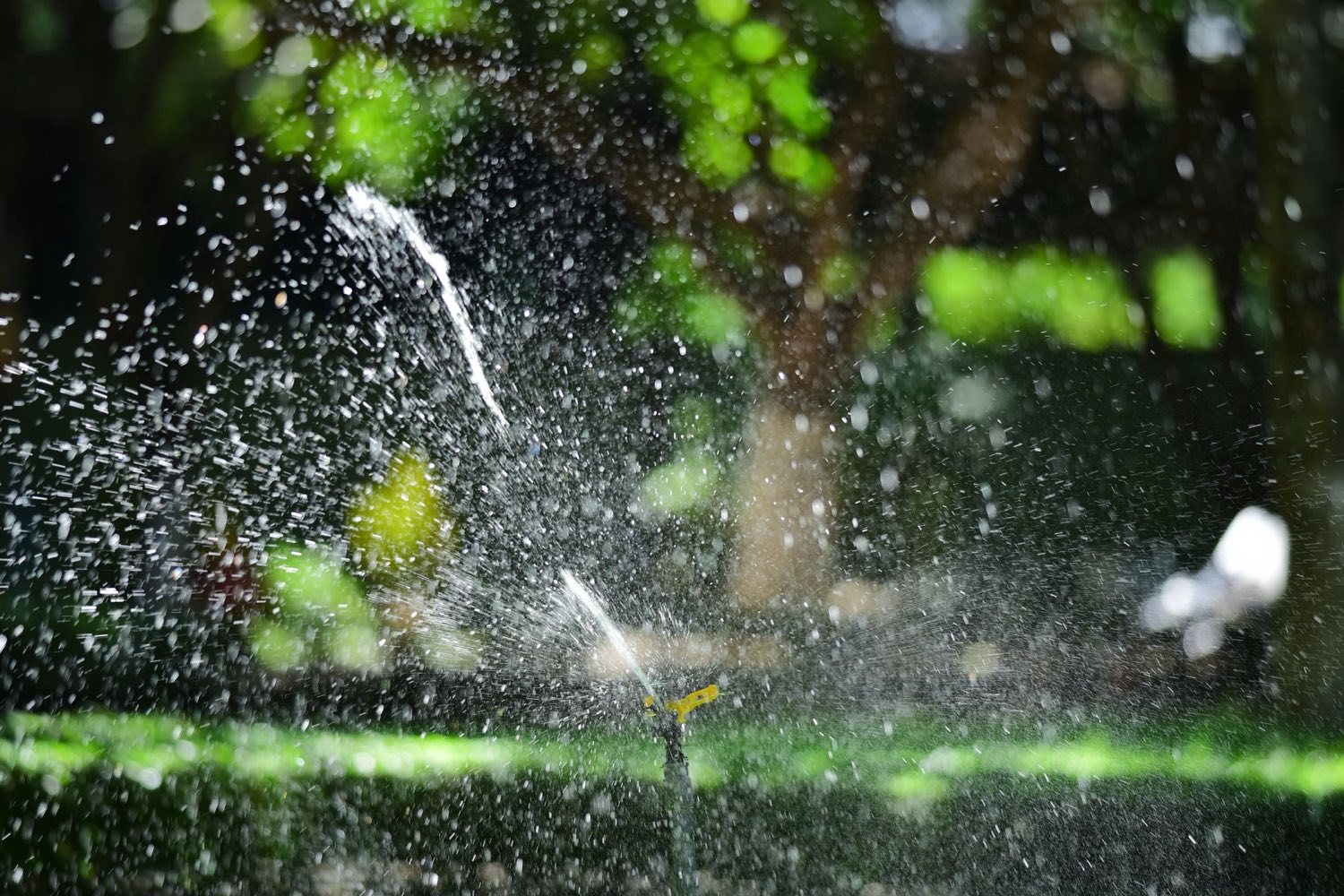
Both extremes damage a foundation. Drought lets the clay shrink and pull away; saturation makes it swell and lift. The unevenness between the two does the harm. The goal is stable moisture, not maximum or minimum. During Alvin's roughly four-month hot season, watering the foundation soil keeps it from shrinking away from the slab: a soaker hose or drip line run 8 to 18 inches from the foundation, at low pressure so the water soaks in rather than runs off, on a timer. The recommended technique is "cycle and soak": several short watering cycles rather than one long soak, which gets water into the soil without pooling it. Don't over-water (that just flips the problem to the swell/heave side) and don't water directly into a crack.
Trees and large root systems
A large tree's roots pull significant water from the soil, and near a foundation that drives seasonal clay shrinkage specifically on the tree's side of the house, which is differential movement again. Roots commonly extend two to three times the width of the canopy, well beyond what the branches suggest. Two mitigations: keep large species well away from the slab, and install a vertical root barrier, roughly 30 to 36 inches deep per extension guidance, between an existing tree and the foundation if it's already close.
Watch for a hidden plumbing leak
A slow under-slab supply leak or a cracked sewer line is a hidden moisture source that keeps one patch of clay permanently swollen, mimicking or actually causing localized heave. An unexplained jump in the water bill, a persistently damp or warm spot on the slab, or unexplained localized movement in one area are worth checking with a plumbing test.
What to watch for, and when to call
- Water pooling against the foundation after rain, or a downspout dumping right at the slab edge.
- Soggy spots that never dry out, or one side of the yard staying wet while another cracks.
- Cracks that track the seasons, showing up or widening in the dry stretch and easing after rain. That pattern points at soil-moisture swing rather than a one-time settlement.
- A large tree within a short distance of the house, especially on the side where doors have started sticking.
The best time to sort out drainage is with or just before a pier repair, while the soil is already open and a crew is already on site. Short of that, a look is worth scheduling when symptoms track the weather, or when standing water or a soggy yard shows up regularly.
The payoff
Moisture and drainage work is modest next to structural repair, and it's the spend that protects the structural repair. Many pier warranties are conditional on maintained drainage; neglect it and the coverage that was paid for can be voided. On Alvin's clay, the prevention spend is cheap relative to a second pier job, which is the whole reason to get it right the first time. See what foundation repair costs for the honest comparison.
Area covered
Alvin, TX (ZIP 77511/77512) and Brazoria County.