Foundation trouble rarely shows up as one dramatic crack. It shows up as a handful of small things at once: a door that started sticking, a floor that feels a little off, a crack creeping out of a window corner. One of those alone is usually nothing. Several together, especially after a hard dry spell, are how clay movement reads on an Alvin house. The full list is below, along with why the symptoms come and go with the weather here, and the honest line between "call someone" and "mark it and watch."
Why symptoms come and go with the seasons in Alvin
There's a local tell that generic checklists miss. The clay under and around Alvin (Beaumont, Bacliff, Lake Charles, and Bernard series, all smectitic Vertisols) opens cracks 1 to 2 inches wide and 12 inches or deeper when it dries out, then swells shut when the rain returns. Because that soil rises and falls with moisture, foundation symptoms in Alvin tend to track the calendar. A door that starts binding in August, at the tail end of the roughly four-month hot season, and frees up on its own after the fall rains isn't in your head. The clay under one side of the house lost volume, that corner dropped, and then the ground came back.
That seasonal swing is itself a diagnostic clue. Alvin runs about 75 days a year at 90°F or hotter, a long, high-evaporation dry stretch broken by tropical or frontal downpours. That's the drought-then-rain cycle, not the freeze-thaw heave described on national foundation-repair sites. Watch the calendar along with the symptom. A crack that opens at the end of a dry spell and closes after rain is telling you the soil is cycling seasonally. A crack that only ever widens, season after season, and never recovers is telling you something has settled for good. That's the one to act on.
The full list of signs
Doors and windows:
- Sticking, rubbing, or won't-latch doors and windows. Check the reveal, the gap between the door and the jamb. If it's noticeably narrower on one side, that side often points toward where the house has settled.
Floors:
- Sloping or uneven floors. The marble test: set a marble on the floor and watch it. If it rolls consistently one direction, that's measurable slope worth investigating.
Interior cracks:
- Diagonal or stair-step drywall cracks running out of door and window corners, where framing stress concentrates. Cracks that reopen after being patched and repainted are a strong tell that something underneath is still moving.
Exterior cracks and gaps:
- Stair-step cracks in exterior brick. On Alvin's Vertisol clay, dry-season cracking in the soil itself runs 1 to 2 inches wide and at least a foot deep. The same shrink-swell mechanism produces the matching stair-step pattern in brick veneer.
- Separation opening at trim, or along the frieze board under the roofline.
- A gap between the soil and the foundation, sloping walkways, or water pooling against the house after rain.
Any one of these can be benign. The weight comes from how many show up together, and whether they track the seasons described above.
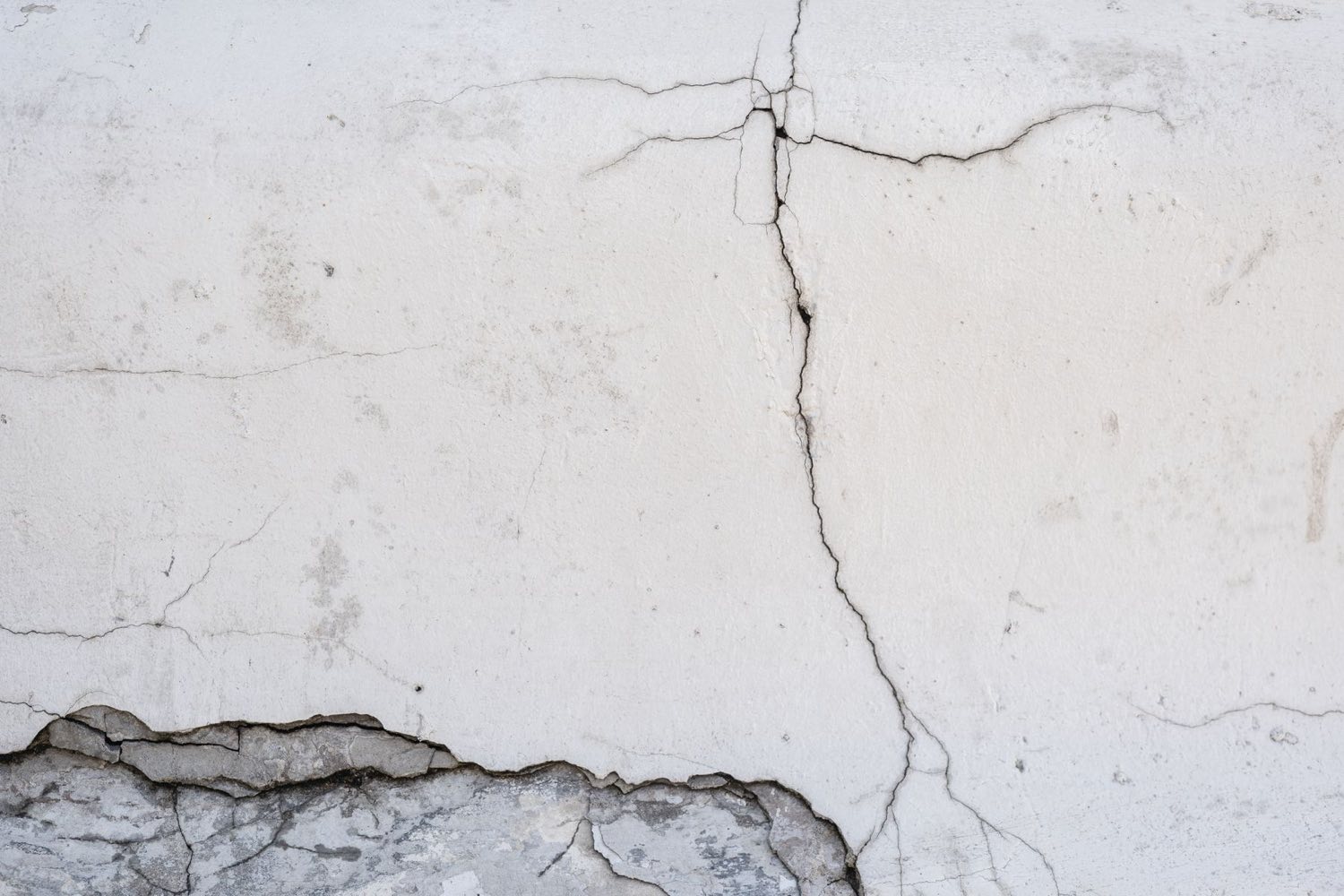
Triage a crack before you panic
Not every crack means a pier job. Width is the first read:
- Under 1/16 inch (hairline): usually cosmetic.
- 1/16 to 1/4 inch: worth monitoring. Mark the ends with a pencil and a date, and watch whether it grows.
- Wider than 1/4 inch, any horizontal crack, or any crack where one side has shifted out of plane with the other: treat it as a structural concern and get it looked at.
Context sharpens the read. A quarter-inch stair-step crack on its own is one thing; the same crack next to a door that won't latch and a floor that slopes is a much stronger signal of active movement.
The risk of waiting
Movement on Alvin's clay doesn't hold still. A crack that's a hairline after this year's dry season can be wider after the next one, because the soil keeps working it. Movement also stresses plumbing. Under-slab lines can pull out of alignment or crack, and a slow under-slab leak keeps one patch of clay permanently swollen, which drives more localized heave in a loop that feeds itself. And going cheap has its own cost: sealing a crack or foaming a slab while the house is still moving just reopens the problem, because a patch only holds once the underlying movement is stopped.
When to call, and when to just monitor
Call for an evaluation when several signs show up together, when a crack passes a quarter inch, when a door that latched fine last year won't close now, or when new cracks appear right after a hard dry-then-wet stretch.
It's usually fine to monitor a single hairline crack with no sticking doors and no sloping floor. Mark the ends, note the date, and check it across a dry season and a wet one. If it stays put through both, it's likely just seasonal settling. If it keeps growing, you caught it early, which is the whole point of watching.
What comes next (a floor-elevation survey and, on this clay, an independent engineer's report) is covered on foundation inspection and diagnosis.
Area covered
Alvin, TX (ZIP 77511/77512) and Brazoria County.